
Heating and cooling equipment in Glastonbury works a long season on both ends of the calendar, from humid stretches along the Connecticut River valley in July to single digit mornings in January. Systems that get consistent attention hold up through that range. Systems that get ignored until something stops working rarely do.
Some maintenance genuinely belongs to the homeowner. The rest belongs to a licensed technician, and knowing which is which protects both your equipment and your warranty. What follows is the full list of what should be happening on your system each year, who should be handling each item, and what we typically find when it has been skipped. If you want to confirm your address falls within our coverage, you can review the Glastonbury and surrounding Hartford County towns we serve.
Understanding the Importance of HVAC Maintenance in Glastonbury, CT
Maintenance is not simply about avoiding breakdowns, though it does that well. A serviced system delivers three things at once: steadier comfort through temperature extremes, lower operating cost because components are not fighting restriction, and a longer service life before replacement becomes necessary.
In our service calls throughout Glastonbury, the pattern is consistent. Emergency no heat and no cooling calls cluster during the first hard cold snap and the first serious heat wave, precisely when the system is asked to run at full capacity for the first time in months. Almost all of those failures trace back to something that a seasonal inspection would have caught while it was still a minor issue.
The rest of this article covers the specific tasks that prevent that outcome.
1. Change Your Air Filters Regularly
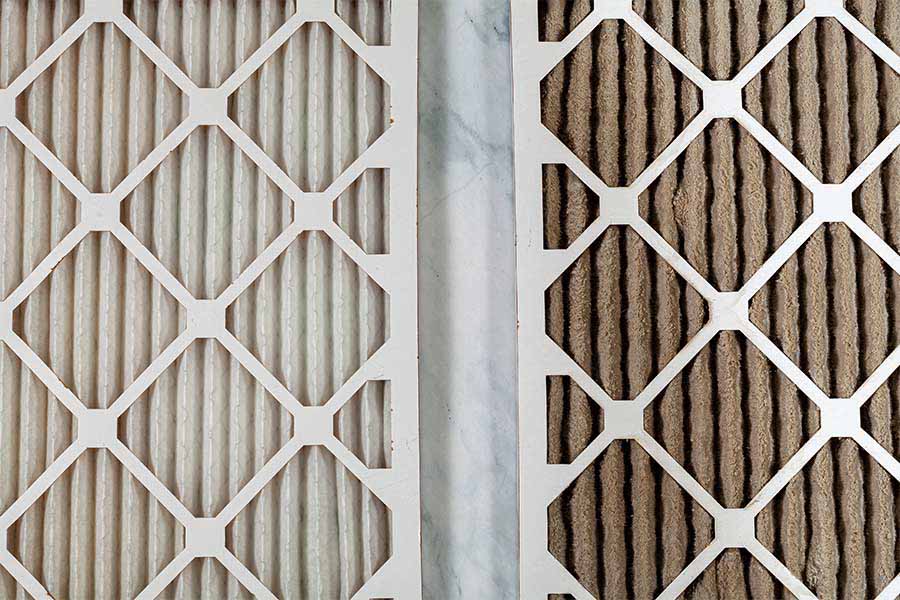
This is the single most valuable task a homeowner can handle without any tools or technical knowledge, and it is also the one most often forgotten.
Improve Air Quality
Filters capture dust, pollen, pet dander, and other particulates before they circulate through living space. Glastonbury sees heavy tree pollen in spring along the older residential streets near Main Street, and homes closer to the farm fields in South Glastonbury deal with additional airborne debris through the growing season.
A general replacement window of one to three months works for most households, though homes with pets, allergy sufferers, or ongoing renovation work land at the shorter end of that range. Higher MERV rated filters capture finer particles, but they also create more resistance, so the rating should match what your blower is designed to handle. A technician can tell you which rating your specific system supports. When indoor air quality is a persistent concern rather than a seasonal one, whole home air quality solutions address the problem at a level a filter alone cannot reach.
Enhance System Efficiency
The efficiency side of filter changes is less visible but just as important. A clogged filter starves the blower of airflow. The motor draws more current to move less air, supply temperatures drift out of range, and in cooling season the reduced airflow across the evaporator can drive the coil toward freezing.
Set a recurring reminder tied to something you already track, such as the first of the month or your utility bill arriving. Consistency matters more than precision here.
2. Have Your HVAC Coils Cleaned
Coils handle the actual heat exchange, and when their surfaces are coated or their fins are bent, the entire system loses capacity.
This is where the line between homeowner tasks and professional work gets drawn. Clearing leaves and yard debris from around the outdoor unit is fine. Cleaning the coils themselves is not a homeowner task, and here is why we hold that position:
- Fin damage is easy and expensive: Aluminum fins bend under very little pressure, and flattened fins permanently reduce airflow across the coil.
- Refrigerant lines run through the work area: A puncture or a kinked line turns a maintenance task into a refrigerant leak and a compressor at risk.
- Evaporator coils are not readily accessible: Reaching them requires opening the air handler cabinet, and reassembly without a proper seal creates air leakage that undercuts the whole system.
- Cleaning chemicals are coil specific: The wrong product corrodes fins or leaves residue that attracts more buildup than it removed.
Professional coil cleaning is part of a standard AC maintenance visit in Glastonbury, where the work happens with the right tools, the right solutions, and the power properly isolated.
3. Have Ductwork Inspected and Sealed
Duct problems are invisible from inside the house, which is exactly why they persist for years.
Joints separate over time, flex duct sags and crimps, and connections in unconditioned basements and attics loosen with seasonal expansion and contraction. Conditioned air escapes into space nobody lives in, while the system runs longer to reach the same thermostat setting. In older Glastonbury homes with retrofitted duct runs threaded through tight framing bays, we frequently find sections that have never been properly sealed since installation.
A professional duct evaluation looks at more than obvious gaps. It accounts for static pressure, return air balance, insulation condition on runs passing through unconditioned space, and whether the duct system was sized correctly for the equipment attached to it. Mastic and metal tape are the correct sealing materials, but applying them without knowing where the pressure losses actually occur usually means sealing the wrong sections. When accumulated debris is part of the picture, professional air duct cleaning is often performed alongside the sealing work.
4. Schedule Annual Professional Inspections
Everything above points toward this one. An annual inspection is the appointment where the tasks that require training, instruments, and manufacturer knowledge all get handled together.
What a Professional Inspection Covers
A thorough visit goes well past a visual once over. Our technicians check refrigerant charge against manufacturer specification, measure electrical draw on motors and compressors, test capacitors and contactors for degradation, verify safety controls and limit switches, perform combustion analysis on fuel burning equipment, inspect the heat exchanger for cracks, confirm proper temperature rise or split, and check condensate management.
Several of those items are safety matters, not comfort matters. A cracked heat exchanger is a carbon monoxide concern, and it is not something visible without proper inspection.
Ideally, cooling equipment is serviced in spring and heating equipment in fall, before each system is asked to carry a full load. Heating systems in particular benefit from a pre-season visit, which is why annual furnace maintenance is best booked in early autumn rather than after the first cold night.
What Working With Our Team Looks Like
We are licensed and insured, we service all makes and models, and we carry 24/7 emergency availability for the situations that do not wait for business hours. Our technicians explain what they found and what it means in plain terms, including the difference between something that needs attention now and something worth watching. You should finish an inspection understanding the condition of your system, not just holding an invoice.
5. Keep the Outdoor Unit Clear of Debris
This one is squarely a homeowner task, and it takes very little time.
The outdoor unit needs unobstructed airflow to reject heat in summer, and heat pumps need the same clearance through winter operation. Aim for roughly two feet of open space on all sides and several feet of clearance overhead. Through the year, watch for:
- Autumn leaf fall: Glastonbury’s mature tree canopy drops heavily, and leaves pack against the coil housing where airflow pulls them.
- Grass clippings and yard dust: Direct the mower discharge away from the unit rather than toward it.
- Snow and ice accumulation: Keep the unit clear through winter, and never chip at ice on the coil. Melting issues that keep recurring point to a drainage or defrost problem worth having looked at.
- Encroaching plantings: Shrubs and climbing vines look tidy but choke airflow within a season or two of being planted too close.
- Roof runoff: Water dumping onto the top of the cabinet from a gutter gap accelerates corrosion and can damage the fan motor.
6. Monitor Thermostat Settings and Consider Smart Control
Thermostat behavior quietly shapes how hard your equipment works, and small adjustments compound across a season.
Modest setbacks while the house is empty or overnight reduce runtime without sacrificing comfort. One important exception applies to heat pumps, where aggressive setbacks can trigger backup electric resistance heat during recovery and cost more than the setback saved. Milder, more gradual adjustments serve heat pump systems better.
A smart thermostat handles this automatically. These units learn occupancy patterns, adjust in advance of your schedule, allow remote control when plans change, and provide usage data that shows where energy is actually going. Many also integrate with broader smart home platforms and flag filter reminders and service intervals on their own.
Compatibility is worth confirming before purchase. Multi stage equipment, heat pumps with auxiliary heat, and systems without a common wire all have specific requirements, and a mismatched thermostat can cause staging problems that look like equipment failure.
7. Keep Condensate Drains and Vents Clear
The task that gets overlooked most often is the one that causes the most water damage.
Cooling equipment pulls significant moisture out of the air, and that condensate has to drain somewhere. Drain lines develop algae and biological growth, and when the line clogs, the pan overflows. In homes where the air handler sits in an attic or a finished basement ceiling, that overflow lands on drywall, insulation, and flooring.
Flue and vent systems deserve the same attention on the heating side. Blocked intake or exhaust terminations on high efficiency equipment, often caused by drifting snow, nesting birds, or debris, will shut a system down on a safety lockout at best and create a combustion hazard at worst. Checking that exterior vent terminations stay clear after heavy snow is reasonable for a homeowner. Anything involving the venting system itself belongs to a technician.
Building a Maintenance Routine That Actually Holds
The honest way to approach this list is to divide it. Filter changes, outdoor unit clearance, thermostat management, and a look at exterior vent terminations belong on your calendar. Coil cleaning, duct evaluation and sealing, condensate and venting service, and full system inspection belong on ours.
If you are deciding where to start, begin with the professional inspection. It establishes a baseline for the condition of your equipment and tells you whether you are maintaining a healthy system or managing one nearing the end of its life. Everything else becomes easier to prioritize once you know which situation you are in.
SM Mechanical Services is a family owned HVAC and plumbing company serving Glastonbury and the surrounding Hartford and Middlesex County areas, with licensed technicians, service for all makes and models, and 24/7 emergency availability. When you are ready to get your system on a regular schedule, book an HVAC inspection and we will give you a clear picture of where things stand.