
Once the heating season settles over Glastonbury, houses close up and stay that way for months. Storm windows go down, doors stay shut, and the same volume of air cycles through the duct system over and over from November into March. Whatever is sitting inside that ductwork circulates with it.
Working in homes across Glastonbury, from the century old colonials near the Main Street historic district to tightly built newer construction off Hebron Avenue, we see the same winter pattern. Families notice more dust on surfaces, a musty note when the heat first kicks on, and allergy symptoms that get worse indoors rather than better. The duct system is often the common thread. Professional air duct cleaning in Glastonbury addresses that directly, and understanding what the service actually does helps you judge whether your home needs it.
Why Indoor Air Quality Matters in Glastonbury Winters
Winter creates a specific problem that does not exist the rest of the year: the air in your home has nowhere to go.
During spring and fall, open windows provide natural air exchange that dilutes indoor contaminants. Once heating season starts, that exchange stops almost entirely. Modern weatherization makes it stop even more completely, which is excellent for energy bills and less excellent for what accumulates indoors.
What builds up during a closed season includes:
- Particulate from the heating system itself: Combustion byproducts, dust burned onto hot surfaces, and debris stirred up when the blower cycles on after months of inactivity.
- Biological contaminants: Dust mites, pet dander, and mold spores that find moisture in cool duct runs passing through unconditioned basements and crawl spaces.
- Everyday household sources: Cooking residue, cleaning product vapors, off gassing from furnishings, and fine particulate tracked in from outside.
- Construction and renovation debris: Drywall dust and sawdust from work done during the year, which settles into duct runs and stays there indefinitely.
The health picture matters here, particularly for households with asthma, allergies, or young children. Connecticut families spend the large majority of winter hours indoors, so indoor air is effectively the air they breathe. When symptoms consistently improve after leaving the house and return within an hour of coming home, the building is worth investigating.
How Air Duct Cleaning Works to Improve Air Quality
Professional duct cleaning is a mechanical process, not a surface wipe down, and the equipment involved is what separates it from anything available at a rental counter.
The work follows a defined sequence. A technician first inspects the duct system, frequently using camera equipment, to document what is actually inside and to identify any moisture intrusion or damaged sections. A high powered vacuum unit is then connected to the trunk line and placed under negative pressure, so that everything dislodged during the process travels into containment rather than into the house. Agitation tools including rotating brushes and compressed air whips work through the individual branch runs to break loose material bonded to duct walls. Supply and return registers are cleaned separately, and the blower compartment, evaporator coil area, and drain pan are addressed since contamination in those components recirculates immediately if left in place.
Negative pressure is the part homeowners should ask about. Without it, agitating a dirty duct system simply relocates the contamination into living space. A legitimate service maintains containment from start to finish and shows you the condition of the system before and after.
Duct cleaning is also frequently paired with attention to the equipment it connects to, since a clean duct system feeding a neglected furnace only solves half the problem. Scheduling furnace maintenance around the same visit means the blower, burners, and filtration are all evaluated together.
Key Benefits of Clean Air Ducts for Your Home
The air quality improvement is the headline, but the mechanical benefits are what often justify the service on their own.
Restored airflow and system efficiency: Accumulated debris narrows the effective diameter of duct runs and restricts registers. The blower compensates by working harder to deliver less air, which shows up as longer run cycles and higher winter energy costs. Clearing the restriction lets the system deliver its rated output.
Reduced strain on equipment: Restriction translates into heat and wear on the blower motor, and reduced airflow across the heat exchanger affects temperature rise. Equipment that is not fighting its own distribution system lasts longer and sees fewer service calls.
More even temperature from room to room: Homes with a bedroom that never warms up or an addition that stays cold often have branch runs partially blocked rather than an undersized furnace. Clearing those runs frequently evens out the distribution.
Fewer odors when the heat runs: That distinctive smell during the first heating cycle of the season comes from material inside the system heating up. Removing it removes the odor at the source.
Lower dust burden on surfaces: Less particulate circulating means less settling on furniture, shelves, and floors, which most homeowners notice within a week or two.
For households where air quality concerns persist after a thorough cleaning, professional air quality testing identifies whether the source is the duct system, the building envelope, or something else entirely.
Signs You Need Air Duct Cleaning This Winter
Duct cleaning is not an annual requirement for every home. These indicators tell you when it is warranted:
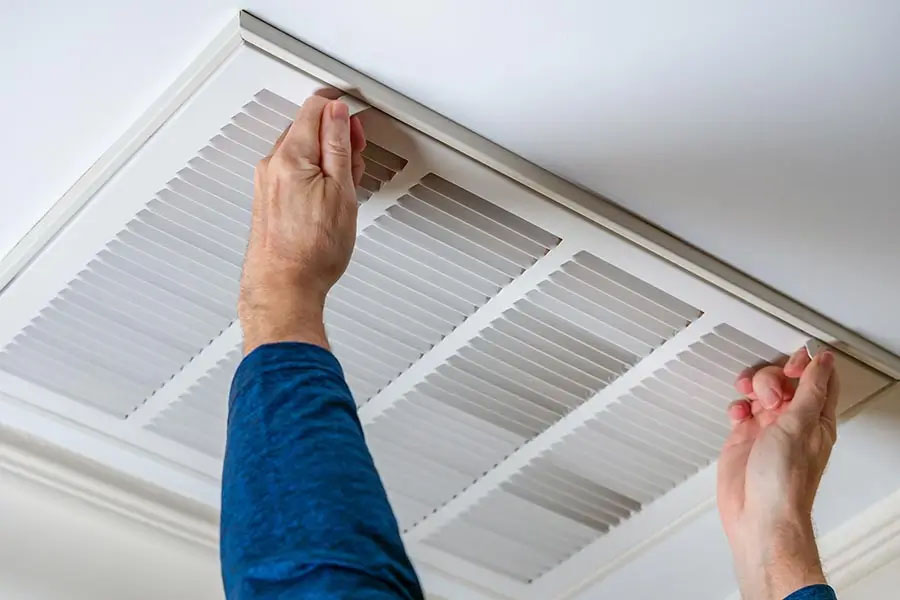
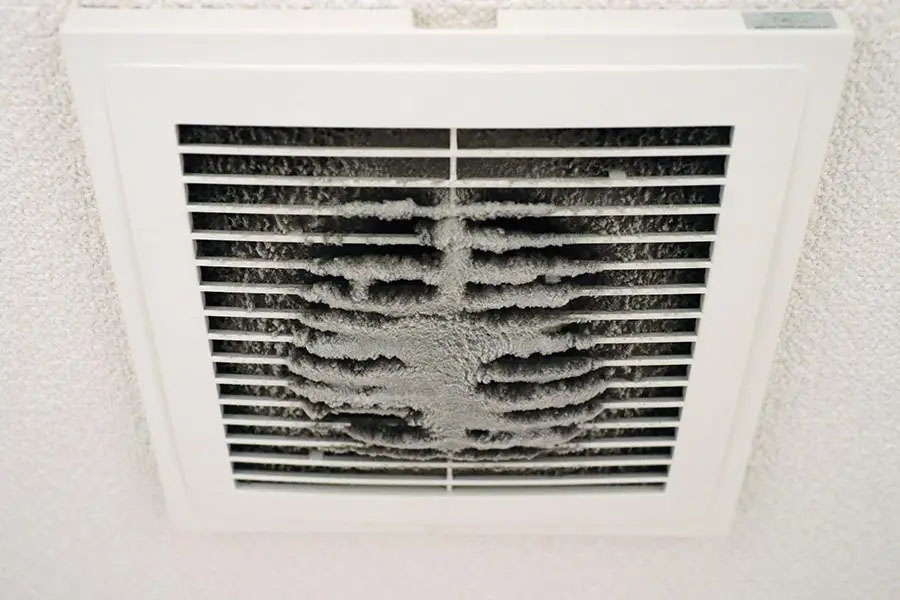
- Visible debris at the registers: Pull a supply vent cover and look inside with a flashlight. Dust coating the interior duct surface a few inches in tells you the rest of the system looks similar.
- Dust that returns immediately after cleaning: Surfaces that need dusting again within days, particularly in rooms furthest from the air handler, suggest the system is redistributing it.
- Uneven heating that has no other explanation: Rooms that stayed comfortable in past winters but now lag behind the thermostat point toward restriction somewhere in the distribution.
- A musty or stale odor on startup: Especially one that fades after the system has been running for a while, which indicates something inside the ducts is being heated.
- Any visible mold around vents or in the duct interior: This requires prompt professional evaluation, both to remove it and to identify the moisture source that allowed it to grow.
- Symptoms that track with being home: Congestion, coughing, or eye irritation that improves when you leave the house and returns when you come back.
- Recent renovation or a newly purchased home: Construction debris and the accumulated history of a previous owner’s household are both good reasons for a baseline cleaning.
Rodent or insect activity in the ductwork belongs in a separate category and should be addressed immediately rather than at the next convenient appointment.
How to Choose a Reliable Air Duct Cleaning Service
The duct cleaning field includes both legitimate operations and low cost outfits that do very little for the money. These criteria help you tell them apart.
Verify licensing and insurance: A properly licensed and insured HVAC contractor carries real accountability and protects you if something in your system is damaged during the work.
Ask what equipment is used: The answer should include truck mounted or high capacity portable negative pressure equipment and mechanical agitation tools. A shop vacuum and a brush is not duct cleaning.
Expect an inspection before a price: A quote given over the phone without anyone seeing the system is a quote based on nothing. Duct configuration, system size, and actual condition all affect scope.
Look for documentation: Before and after imagery of the interior duct surfaces demonstrates that work was performed and gives you a record for future reference.
Be cautious with unusually low advertised pricing: Deeply discounted whole house offers are typically structured to get a technician in the door, and the actual service bears little resemblance to the advertisement.
Confirm the scope in writing: Supply runs, return runs, registers, the blower compartment, and the coil area should all be named specifically so there is no ambiguity about what was included.
Experience with the local housing stock matters as well. Duct systems retrofitted into older Glastonbury homes, those running through unconditioned space along Addison Road area properties, and the tight modern systems in newer subdivisions each present different conditions. Broader indoor air quality services are worth discussing with whoever you hire, since a contractor who only sells duct cleaning will recommend duct cleaning regardless of what your home actually needs.
Breathing Easier Through a Glastonbury Winter
Duct cleaning is not the right answer for every home, and any contractor telling you otherwise is selling rather than diagnosing. It is the right answer when your duct system has measurable accumulation, when symptoms or dust patterns point toward distribution, or when a renovation or a change of ownership has reset what is inside your ductwork.
If your situation is less clear, start with an inspection. Knowing the actual condition of your system tells you whether cleaning is warranted now, whether filtration upgrades would serve you better, or whether the issue lies somewhere other than the ducts. That information costs far less than guessing.
SM Mechanical Services is a family owned HVAC and plumbing company serving Glastonbury and the surrounding Hartford and Middlesex County areas, with licensed technicians and 24/7 availability. If your home feels stuffier than it should this winter, schedule your duct cleaning today and we will show you exactly what is inside your system before recommending anything.